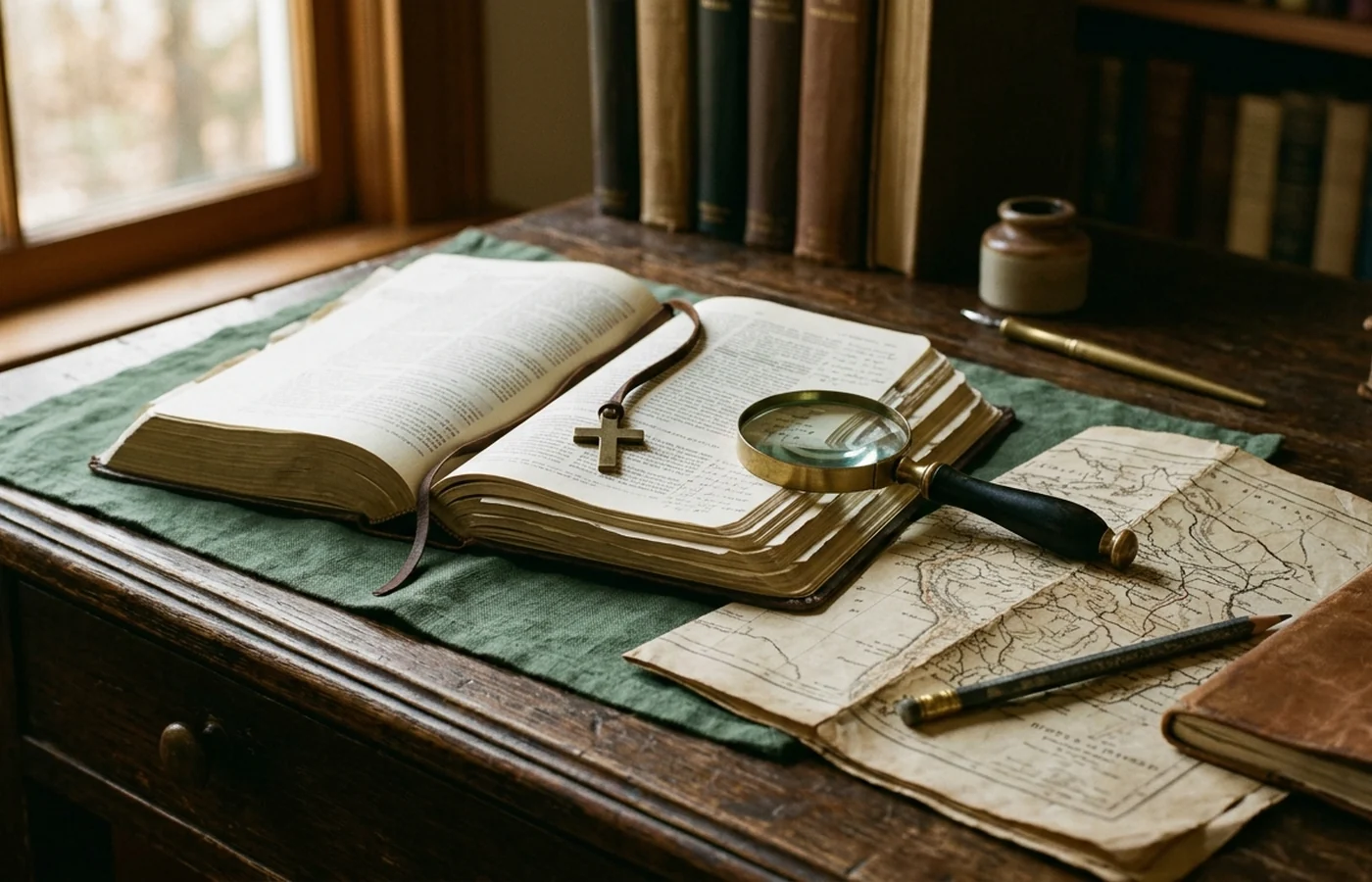
How to Read the Bible Well: the quick answer
Good Bible reading combines prayerful attention with context, genre, repeated observation, responsible interpretation, and lived response.
The best starting point is Nehemiah 8:8 in its full chapter. Read the surrounding passage before applying one verse, then use the topic-specific explanation below to connect meaning with a faithful next step.
PRIMARY TEXT TO READNehemiah 8:8Notice the speaker, audience, genre, repeated ideas, and what comes before and after the cited words.
TL;DR - Quick Summary
- Start with prayer, asking the Holy Spirit for understanding
- Begin with the Gospels (try John or Mark first)
- Read consistently - even 10 minutes daily makes a difference
- Understand context: Who wrote it? To whom? Why?
- Apply what you learn to your daily life
- Use study tools: study Bible, concordance, commentaries
1. Prepare Your Heart
Before opening Scripture, prepare yourself spiritually. Bible reading isn't just an intellectual exercise; it's an encounter with the living God.
1Pray for Illumination
Ask the Holy Spirit to open your eyes to understand God's truth.
"Open my eyes that I may see wonderful things in your law." - Psalm 119:182Come with Humility
Approach Scripture ready to be challenged, corrected, and changed.
3Expect to Meet God
Read expecting God to speak to you through His Word.
2. Where to Start Reading
The Bible isn't meant to be read like a novel from cover to cover. Here's a strategic approach for beginners:
BEST FOR BEGINNERSOption 1: Gospel + Letters
- Gospel of John - See who Jesus is
- Gospel of Mark - Fast-paced account of Jesus' ministry
- Romans - Core Christian theology
- Ephesians - Your identity in Christ
- James - Practical Christian living
Option 2: Old Testament Foundations
- Genesis 1-11 - Origins and early history
- Exodus 1-20 - God's deliverance and the Law
- Psalms - Selected psalms for worship
- Proverbs - Wisdom for daily life
- Isaiah 40-66 - Prophecies of the Messiah
Option 3: Chronological Reading
Follow biblical events in the order they occurred. This helps you see the big picture of God's redemptive plan unfolding through history.
3. Essential Reading Methods
SOAP Method
- Scripture - Write out the verse
- Observation - What do you notice?
- Application - How does this apply to you?
- Prayer - Pray the scripture back to God
REAP Method
- Read - Read the passage carefully
- Examine - Study what it means
- Apply - Make it personal
- Pray - Respond in prayer
Inductive Bible Study
- Observation - What does it say?
- Interpretation - What does it mean?
- Application - How do I live it?
4. Understanding Context is Key
To properly understand any Bible passage, always consider its context:
Historical Context
When was it written? What was happening at that time?
Literary Context
What comes before and after this passage?
Cultural Context
What cultural practices or customs are mentioned?
Theological Context
How does this fit into the whole Bible's message?
5. Ask the Right Questions
Observation Questions
- Who are the main characters?
- What is happening in this passage?
- Where and when is this taking place?
- Why is this event significant?
- How do the people respond?
Interpretation Questions
- What is the main point of this passage?
- What does this reveal about God's character?
- Are there any promises, commands, or warnings?
- How does this point to Jesus?
- What did this mean to the original audience?
Application Questions
- What is God saying to me through this?
- How should this change my thinking or behavior?
- What specific action can I take?
- Is there a sin to avoid or a promise to claim?
- Who can I share this insight with?
6. Build a Sustainable Habit
Set a Specific Time
Choose a consistent time each day. Morning is ideal for many, but find what works for your schedule.
Start Small
Begin with 10-15 minutes daily. Consistency matters more than length.
Choose a Place
Find a quiet spot free from distractions where you can focus.
Journal Your Insights
Write down what you're learning. This helps retention and spiritual growth.
Join a Study Group
Studying with others provides accountability and deeper insights.
Use Technology Wisely
Bible apps can help, but don't let notifications distract you.
7. Helpful Study Tools
Study Bible
Contains notes, cross-references, maps, and explanations. Great for beginners.
Bible Dictionary/Encyclopedia
Explains people, places, customs, and theological concepts.
Concordance
Helps you find verses containing specific words.
Commentary
Provides scholarly insights and interpretations of passages.
Bible Reading Plan
Guides you through Scripture systematically.
"Your word is a lamp for my feet, a light on my path."
Psalm 119:105Continue Learning
Previous: What the Bible Is Explore: Old Testament Overview Explore: New Testament Overview Discover: The Teachings of JesusHow to study and apply this topic
Read a passage in its literary and historical setting before drawing a personal application. Use this four-step path to test what you have read without reducing how to read the bible well to a slogan.
Observe
Notice genre, structure, repeated words, people, place, and movement before explaining.
Understand
Ask what the text communicated in its literary and historical setting.
Connect
Relate the passage to its book, the wider canon, and the story centered on Christ.
Respond
Choose an application consistent with the text, wisdom, and love of neighbor.
Common questions about how to read the bible well
What is how to read the bible well?+
Good Bible reading combines prayerful attention with context, genre, repeated observation, responsible interpretation, and lived response. The passage's context and the real-world fruit of an interpretation both matter when moving from definition to practice.
Where should I begin in the Bible?+
Begin with Nehemiah 8:8. Read the complete paragraph and chapter, compare a second reliable translation, and write down observations before reaching for commentary or topical lists.
Do all Christians understand this identically?+
No. Christians share central convictions about Jesus and Scripture while differing about some interpretations, vocabulary, church practices, and the weight given to tradition or experience. Good learning names those differences fairly.
Continue studying how to read the bible well
This topic connects with the wider bible teachings collection. These related guides develop neighboring ideas and help place this article in a broader learning path.
- The Teachings of Jesus — Jesus announces God's kingdom and calls people toward love, repentance, trust, mercy, justice, prayer, and wholehearted discipleship.
- What Is the Bible? — The Bible is a diverse collection of writings received by Christians as Scripture and read as the unified story of God's creation, covenant, redemption, and renewal.
- Old Testament Overview — The Old Testament tells the story of creation, Israel, covenant, wisdom, worship, exile, and prophetic hope across several literary genres.
Connect this topic to the wider Christian story
How to Read the Bible Well becomes clearer when it is read beside related parts of Scripture and Christian practice. Use the complete Bible library to move from a topic back into complete books and chapters. Then explore the Bible study tools guide to build a careful observation-to-application workflow, and continue with the guide to Jesus' identity to connect interpretation with the center of Christian faith.
Sources and editorial approach
This pastoral-educational guide is grounded in the cited biblical texts and the broad stream of historic Christian interpretation. It does not replace a full commentary, local pastoral care, legal advice, or healthcare. Scripture wording may be summarized; use a complete translation for study.
How Bless.You researches and reviews content →